Botox has been a household name for decades, but it’s no longer the only botulinum toxin injectable on the market. Dysport has become one of the most popular alternatives, and depending on your goals, it might even be the better fit for you.
So how do you choose? Below, we break down how Dysport vs. Botox compare in results, cost, and longevity, so you can walk into your consultation already knowing what to ask.
What Dysport & Botox Have in Common
At first glance, Dysport and Botox look nearly identical. Both are prescription injectables made from botulinum toxin type A, and both work by temporarily relaxing the facial muscles that cause dynamic wrinkles, like the lines between your brows and across your forehead.
Once injected, both products soften those lines within days and keep skin looking smoother for several months. Because they share the same underlying mechanism, many providers are trained to use both, and either one can deliver excellent, natural-looking results in experienced hands.
That said, they’re formulated differently, and those differences matter when you’re deciding which one fits your goals.
Botox (onabotulinumtoxinA): Results, Cost & Longevity
Botox Cosmetic, generically known as onabotulinumtoxinA, is the original and most widely recognized injectable of its kind.
- Results: Botox is FDA-approved for more cosmetic areas than Dysport, including forehead lines, crow’s feet, and glabellar lines (the “11s” between your brows). Its molecule stays a bit more concentrated at the injection site, which many providers like for precise, targeted areas.
- Cost: Botox is priced per unit, typically in the $10 to $20 range depending on your provider and location. A full-face treatment commonly uses somewhere in the range of 40 to 64 units, though your exact dose depends on your muscle strength, treatment areas, and goals.
- Longevity: Most people enjoy smooth, refreshed results for 3 to 4 months before a touch-up is recommended.
Dysport (abobotulinumtoxinA): Results, Cost & Longevity
Dysport, generically known as abobotulinumtoxinA, is formulated with a smaller molecule that tends to spread a little more once injected.
- Results: That spread makes Dysport a favorite for treating broader areas, like the forehead, in fewer injection points, and many patients notice it kicks in slightly faster than Botox, often within 2 to 3 days. Patients frequently describe the results as soft and natural-looking.
- Cost: Dysport units are smaller than Botox units, so it isn’t an apples-to-apples comparison. Most providers use roughly 2.5 to 3 Dysport units for every 1 Botox unit, and Dysport is usually priced lower per unit, generally $3 to $6. Once the higher unit count is factored in, total treatment cost is typically comparable to Botox, and sometimes slightly less.
- Longevity: Dysport results typically last 3 to 4 months as well, and some patients report results stretching a bit closer to the 4-month mark.
Which One Is Right for You?
Neither injectable is objectively “better”; they’re simply suited to different goals. Botox’s precision makes it a great all-around option for a broad treatment plan across multiple areas. Dysport’s faster onset and natural spread make it especially popular for larger areas like the forehead, where fewer injection points and a softer finish are appealing.
The best way to decide is to talk with an experienced injector about your goals, your budget, and how your face moves. From there, they can recommend the option or combination that will give you the most natural, flattering results.
What to Expect at Your Appointment
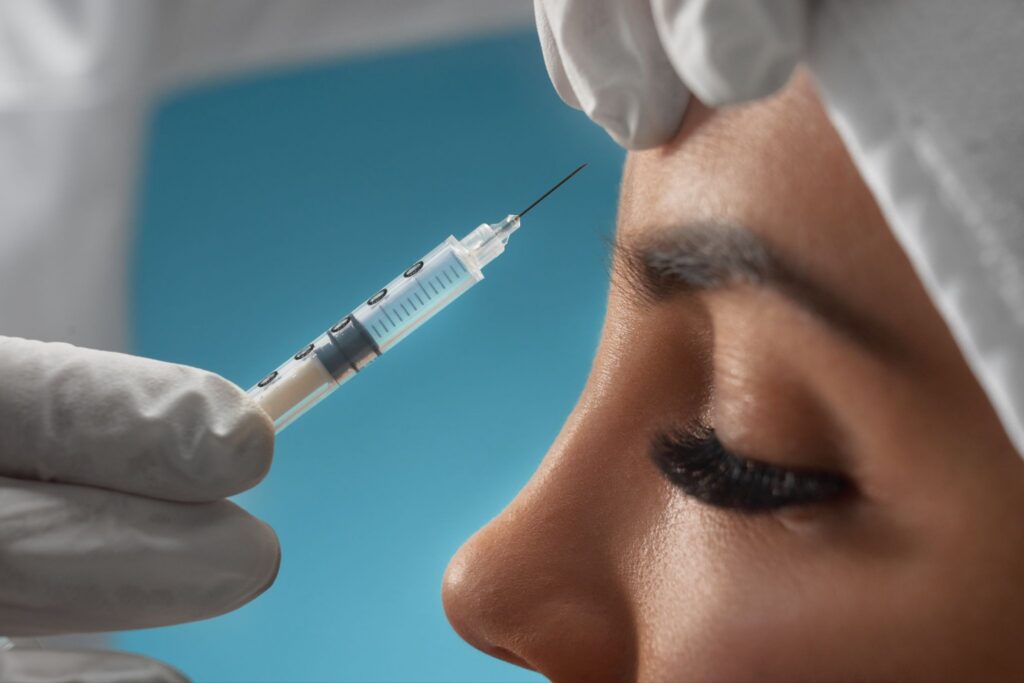
Whether you choose Botox or Dysport, the process is quick and straightforward. Your provider will start by assessing your facial muscles and discussing your goals, then map out precise injection points. The injections themselves take about 10 to 15 minutes, using a fine needle that causes only minor, momentary discomfort.
There’s no downtime, so you can return to most normal activities right away. Your provider may recommend avoiding strenuous exercise, alcohol, and lying down for a few hours afterward to help the product settle properly. You’ll typically start noticing results within a few days, with full results visible by the one-to-two-week mark.
FAQs About Dysport vs. Botox
Is Dysport cheaper than Botox?
Per unit, yes, but because Dysport requires more units to achieve the same effect, total treatment cost is usually similar to Botox once everything is factored in.
How many units of Dysport equal one unit of Botox?
Most providers use a conversion ratio of about 2.5 to 3 units of Dysport for every 1 unit of Botox.
Which lasts longer, Botox or Dysport?
Both typically last 3 to 4 months. Individual results vary based on metabolism, muscle strength, and treatment area.
Can I switch between Botox and Dysport?
Yes. Many patients try both over time to see which they prefer. Your provider can help you transition smoothly between the two.
Does Botox or Dysport hurt?
Neither treatment is typically painful. Most patients describe the sensation as a quick pinch, and your provider can apply a topical numbing cream beforehand if you’re sensitive to needles.
How soon will I see results?
Dysport tends to show initial results within 2 to 3 days, while Botox usually takes 3 to 7 days. Both continue to improve over the following one to two weeks.
Trust the Professionals at BellaVida MedSpa
Choosing between Botox and Dysport doesn’t have to be complicated, especially with the right team in your corner. At BellaVida MedSpa in Temecula, California, our licensed injectors take the time to understand your goals and craft a custom treatment plan using Botox, Dysport, or both.
We also offer a full menu of advanced skin treatments, including XERF, so whatever your skin goals look like, we have a plan to help you reach them.
Ready to see what smoother, more refreshed skin feels like? Contact BellaVida MedSpa today to book your appointment.